Waste Management and Circular Economy: Rethinking Consumption
- Persephone Environmental Development Association

- Feb 18
- 2 min read
In today’s world, the way we produce and consume goods is placing increasing pressure on our planet. Rising waste levels, resource depletion, and environmental degradation highlight the urgent need for a more sustainable approach. This is where waste management and the concept of the circular economy come into play—offering practical solutions to rethink how we use resources.
The Problem with Linear Consumption
Most modern economies still operate on a linear model: take, make, dispose. Raw materials are extracted, transformed into products, and eventually discarded as waste. This system not only accelerates environmental damage but also leads to the loss of valuable resources that could otherwise be reused.
Landfills continue to grow, oceans are increasingly polluted, and ecosystems are under stress. Without a shift in mindset, these challenges will intensify in the coming years.
What Is Circular Economy?
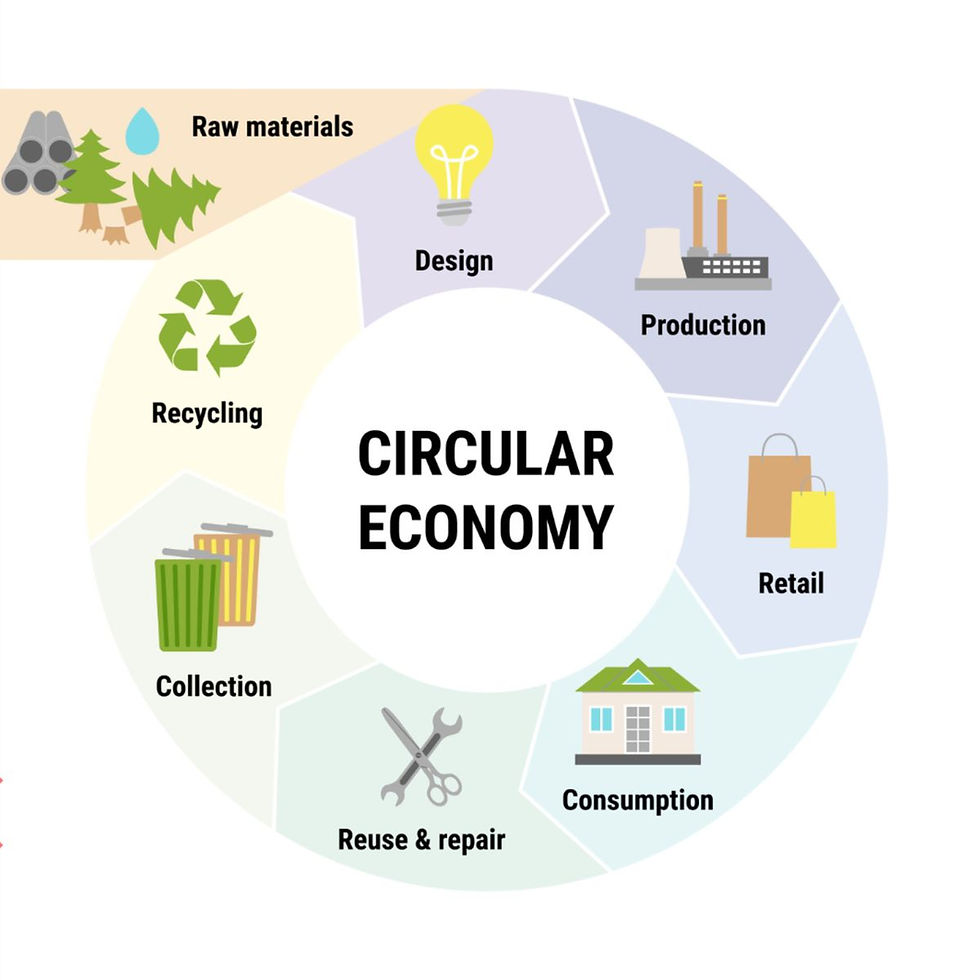
The circular economy offers an alternative model focused on reducing waste and maximizing resource efficiency. Instead of discarding products after use, this approach encourages reuse, repair, recycling, and regeneration.
At its core, the circular economy aims to:
Design out waste and pollution
Keep products and materials in use for as long as possible
Regenerate natural systems
By rethinking product life cycles, the circular economy transforms waste into a resource rather than a problem.
The Role of Effective Waste Management
Waste management is a critical part of this transition. Proper sorting, recycling systems, and responsible disposal methods ensure that materials can re-enter the production cycle.
However, waste management alone is not enough. The focus must also shift toward reducing waste at its source—through conscious consumption, sustainable product design, and responsible production practices.
Everyday Actions That Make a Difference
Individuals play a key role in supporting a circular economy. Small, consistent actions can collectively create significant impact:
Reducing single-use products
Reusing and repairing items instead of replacing them
Separating waste for recycling
Supporting sustainable and ethical brands
Being mindful of consumption habits
These everyday choices help decrease waste generation and promote more sustainable systems.
The Role of Communities and Organizations
Communities, businesses, and organizations are essential drivers of change. By implementing recycling programs, supporting local sustainability initiatives, and raising awareness, they can accelerate the transition toward circular systems.
Collaboration between public institutions, private sector actors, and civil society organizations is especially important in building effective waste management infrastructure and promoting long-term behavioral change.
Looking Ahead
Transitioning to a circular economy is not just an environmental necessity—it is also an economic opportunity. It encourages innovation, creates new jobs, and fosters more resilient systems.
The shift requires collective effort, from policymakers and businesses to individuals and local communities. By rethinking consumption and embracing circular principles, we can move toward a future where waste is minimized, and resources are used responsibly.
Conclusion
Waste management and circular economy practices offer a clear path toward sustainability. By changing how we produce, consume, and dispose, we can reduce environmental impact and build a more balanced relationship with our planet.
The question is no longer whether change is needed—but how quickly we are willing to act.